Yes — load it
- Household junk and furniture: sofas, tables, boxes, general clutter.
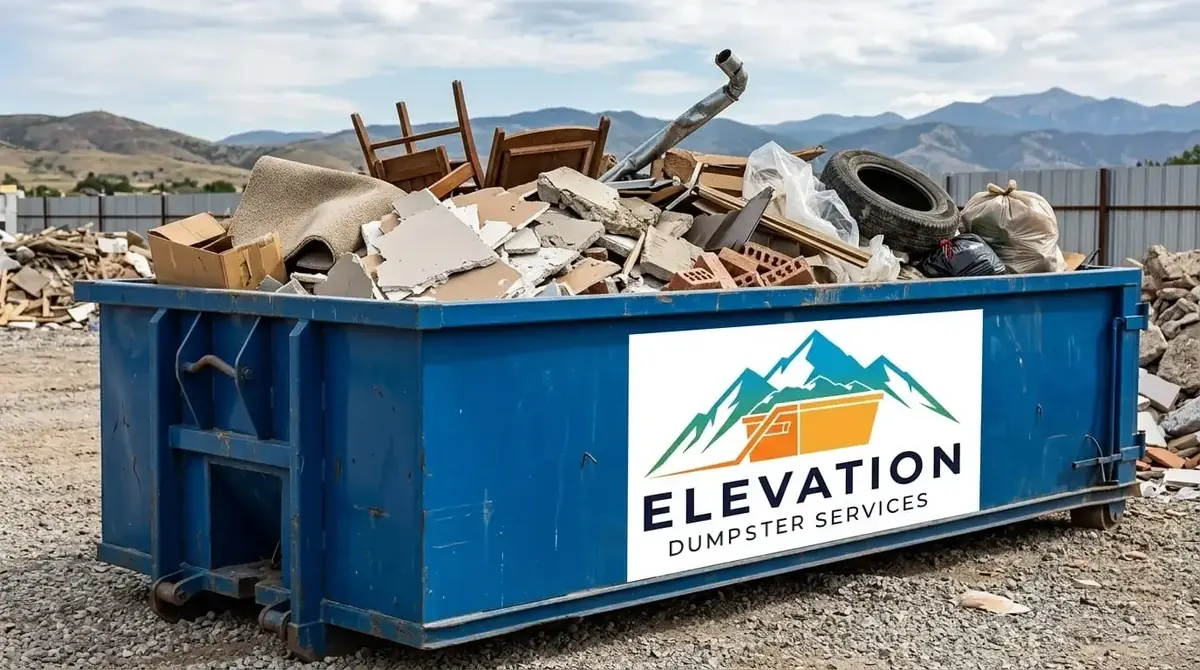
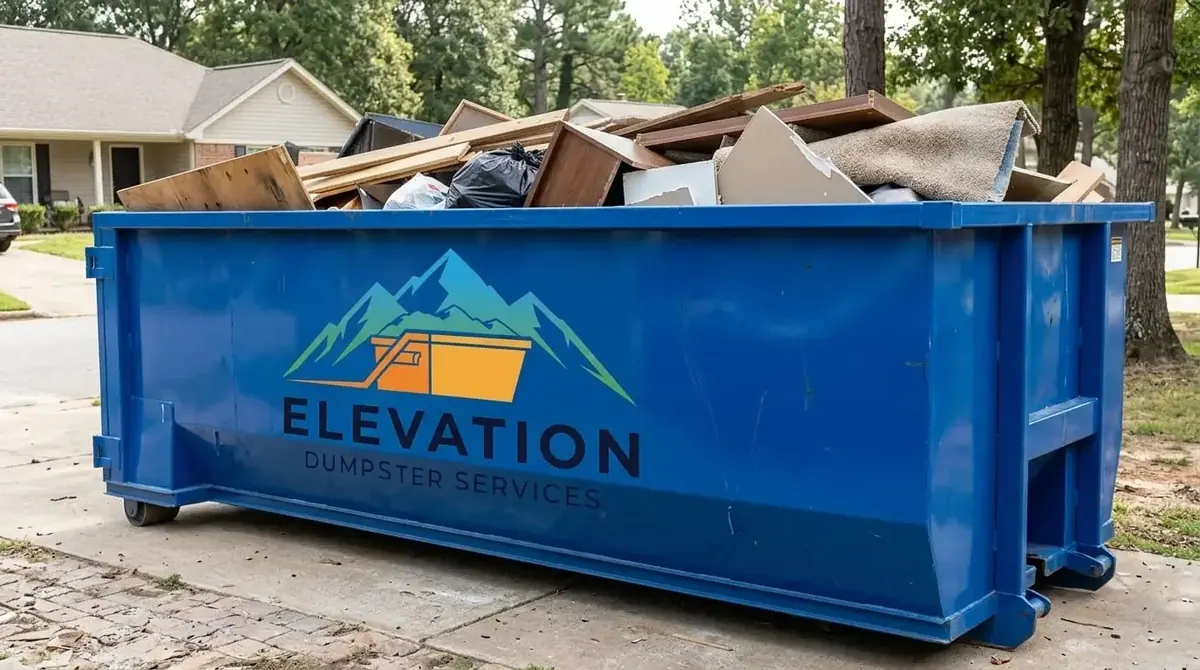
- Construction and renovation debris: wood, drywall, tile, flooring and cabinets.
- Roofing: shingles, tar paper and underlayment — heavy, so mind the weight allowance.
- Small appliances without refrigerant.
- Concrete, brick, dirt and rock — only in a 10 or 15 yard, because of the weight.
- Yard waste: branches, leaves, clippings, shrubs, soil, sod and small stumps.
DADS, the WM-operated landfill in Aurora that takes many south-metro loads, lists construction and demolition debris, household trash, clean soils and yard waste among the materials it accepts.
What Colorado law keeps out of landfills
CDPHE lists the residential materials that cannot be disposed of in a Colorado solid waste site. These are the reasons behind most of the no list:
Colorado law asks haulers to tell customers this one directly: lead-acid batteries are banned from landfills — take them to a battery retailer or recycler.
What our boxes keep out too
On top of the state bans, we do not accept paint, solvents or oils, fuel, hazardous chemicals, gas cylinders or propane tanks, medical waste, or asbestos. Leftover paint has its own program: CDPHE says that since July 1, 2015 PaintCare collects unused paint in Colorado, and households and some businesses with 100 gallons or more can book a free large-volume pickup at PaintCare.org. If you are unsure about something, call (720) 964-2184 before you toss it in — it is far cheaper than finding out at the gate.
No — and where it goes instead
Appliances and refrigerant
Colorado's list does not ban appliances, but federal law covers what is inside them. Under Clean Air Act Section 608, US EPA says "The final disposer of appliances is responsible for recovering any refrigerant contained in appliances," and if someone recovers it earlier, EPA requires a signed statement with that person's name and address and the date. That is why fridges, freezers and AC units need arranging in advance rather than going in with the junk. Colorado's electronics ban, for its part, does not cover large appliances such as washers, dryers, refrigerators, ovens, microwaves and dishwashers.
The asbestos rule in Colorado
Colorado regulates asbestos more tightly than the federal rules, because it covers single-family homes. If a renovation will disturb more than the trigger amounts — for a house, 50 linear feet on pipes, 32 square feet on other surfaces, or the volume of a 55-gallon drum — the materials must first be inspected by a Colorado-certified asbestos building inspector. Every demolition needs an inspection and a state notice 10 working days ahead. CDPHE also says concrete or wood bonded to or contaminated with asbestos material, such as floor tile or mastic, may not be recycled during demolition. Asbestos never goes in a roll-off. CDPHE's asbestos line is 720-507-5136.
Heavy loads, and the loads that need a word first
Concrete, dirt and tile are fine — in a 10 or 15 yard, because they fill the weight allowance long before the box looks full. Keep clean concrete and soil apart from everything else so neither load is spoiled. Yard waste is fine too; for a big landscaping job, tell us if junk or lumber is coming out as well and we plan the boxes. Larkspur residents will know the Town dump turns away concrete, rocks, mattresses, tires and electronics — a roll-off takes the first three. If you are not sure about something, call before you load it.